
Holding the Line: When the Best Design Decision is to Not Build It
ROLE
Sole Product Manager: Strategy, Research & Prototyping
Led cross-functional alignment with EE
COMPANY
NIO
READING TIME
3-min
01 The Trap of "Engineering-First" Research
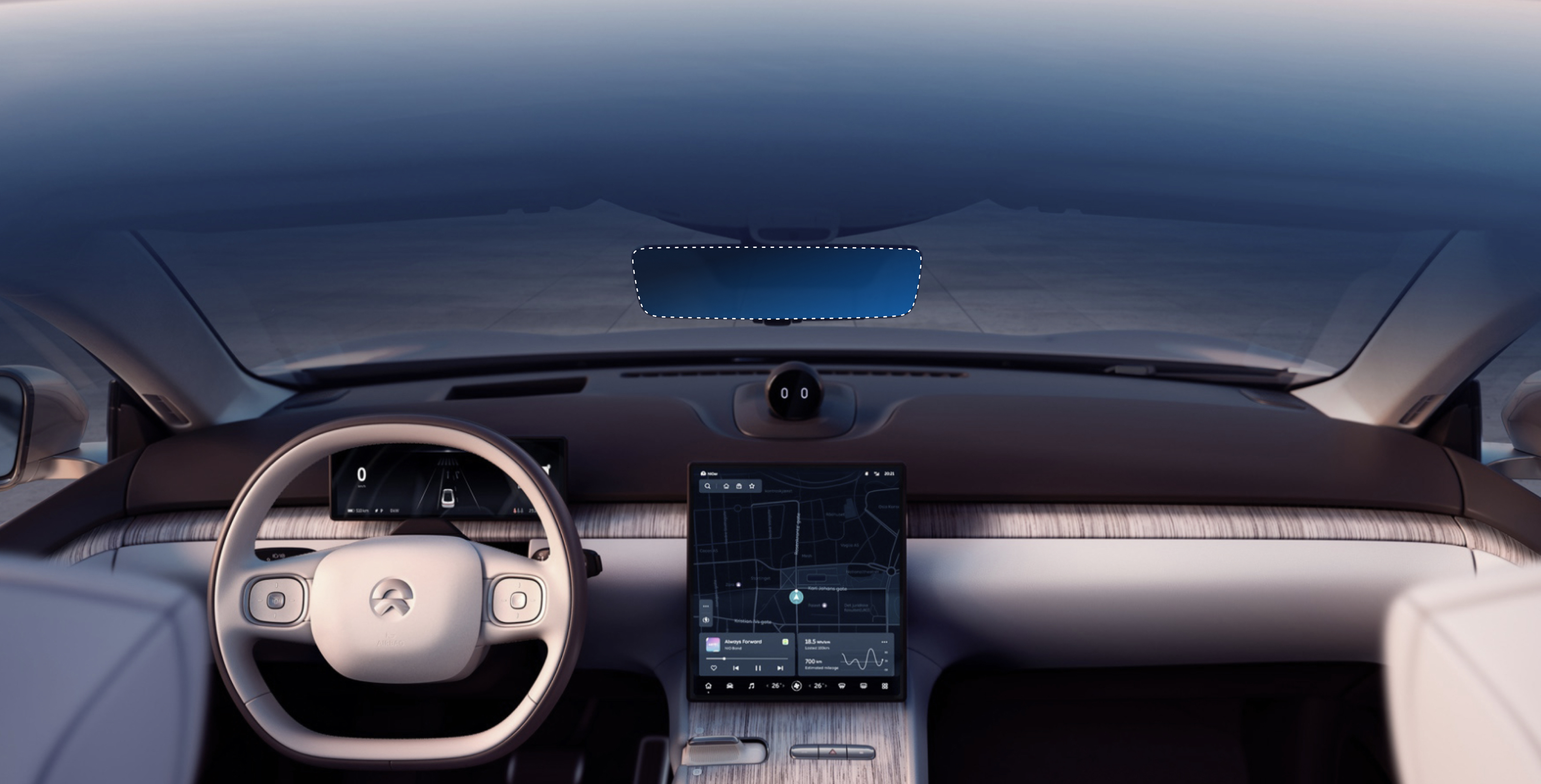
At NIO, I was tasked with leading a high-stakes study on the Digital Interior Rearview Mirror. Before I took over, the project was stuck. A Product Manager had conducted research through a purely engineering lens—presenting static side-by-side photos of camera angles and resolution specs.
Leadership was unsatisfied but couldn't pinpoint why. The team was caught in a dangerous momentum: in a large organization, being assigned a topic usually implies a mandate to "greenlight" it. Everyone expected me to build the case for production, but I sensed we were about to invest millions into a feature that might actually degrade the driving experience.
02 Shifting the Focus: From "Specs" to "Scenarios"
- I decided to push back against the "default-to-launch" culture. Instead of looking at how the camera performed in a lab, I focused on the human reality of driving.
-
- I knew that static photos didn't account for the cognitive load of a driver’s eyes constantly shifting focus between a digital screen and the physical world. To truly "hold the line" for quality, I went deep into the technical and physical boundaries of the hardware:
-
- The War on Distortion: I bypassed internal reports and contacted Tier-1 suppliers directly. I wanted to know if the industry-standard distortion could be optically corrected or if we were fighting the laws of physics.
- The "Bezel" Problem: I obsessed over the black borders (bezels) of the display. In a luxury cabin like NIO’s, a clunky digital frame disrupts the seamless aesthetic. I explored whether we could hide the hardware entirely or if the current tech would always feel like an "afterthought."
03 Making Leadership "Feel the Pain"
- Data and slides can be manipulated, but visceral experience cannot. To break the deadlock, I moved the conversation out of the meeting room and into the driver’s seat. I built a functional prototype and invited the executive leadership for a "Drive-Along" under challenging real-world conditions—night glare, tunnels, and high-speed merges.
- The goal was to move past static pixels and expose three fundamental flaws that no deck could capture:
-
- The Perspective Dissonance: This was the most jarring discovery. Traditional mirrors are positioned at the A-pillar (front), but our digital cameras were mounted further back on the C-pillar. During the drive, leadership experienced a sensory conflict: their brains expected a reflection from the front-left, but the screen delivered a vantage point from several feet behind. This mismatch in spatial reference points made judging distances during lane changes counter-intuitive and mentally taxing.
- The Physicality of the Hardware: In the cabin, the "seamless" vision we promised was broken by the reality of the hardware. The thick bezels required for the automotive-grade display clashed with NIO’s "Pure" design language. What looked like a high-tech upgrade on a slide felt like a bulky, distracting after-thought when sitting in a premium interior.
- The "Visual Leap" Fatigue: I led the stakeholders through a series of quick glances between the physical side mirrors and the digital center display. They immediately felt the focal depth strain—the eye’s struggle to constantly refocus between the real world and a 2D screen.
-
- By making the problem tangible, the conversation shifted from "how do we fix the UI" to "is this technology fundamentally ready for our users?" The frustration they felt behind the wheel provided a clarity that months of engineering reports had failed to deliver.
04 The "Five-Dimension" Decision Board
To finalize the argument, I moved from "feeling" to "framework." I presented a 5-Dimension Decision Board that evaluated the project across:
- User Value
- Technical Maturity
- BOM Cost
- Brand Consistency
- Long-term Evolution Potential.
The logic was inescapable: the marginal gain in visibility was far outweighed by the high cost, technical immaturity, and the compromise to our design DNA.
05 The Outcome: Saving Resources for What Matters
Based on my recommendation, leadership made the rare and difficult decision to cancel the project. UX teams are often the last line of defense against "feature creep." Holding the line doesn't just mean fighting for a better button; it means having the professional integrity to tell the organization when a feature shouldn't exist.
- Experience Over Evidence: When data is ambiguous, create a physical experience that makes the problem undeniable.
- Objectivity Over Ownership: A senior designer’s loyalty is to the user and the brand, not to their own project count.
- Strategically "No": By stopping a mediocre product, I saved our engineers and designers thousands of hours, allowing them to focus on innovations that actually define the NIO experience.
Holding the Line: When the Best Design Decision is to Not Build It
ROLE
Sole Product Manager: Strategy, Research & Prototyping
Led cross-functional alignment with EE
COMPANY
NIO
READING TIME
3-min
01 The Trap of "Engineering-First" Research
At NIO, I was tasked with leading a high-stakes study on the Digital Interior Rearview Mirror. Before I took over, the project was stuck. A Product Manager had conducted research through a purely engineering lens—presenting static side-by-side photos of camera angles and resolution specs.
Leadership was unsatisfied but couldn't pinpoint why. The team was caught in a dangerous momentum: in a large organization, being assigned a topic usually implies a mandate to "greenlight" it. Everyone expected me to build the case for production, but I sensed we were about to invest millions into a feature that might actually degrade the driving experience.
02 Shifting the Focus: From "Specs" to "Scenarios"
- I decided to push back against the "default-to-launch" culture. Instead of looking at how the camera performed in a lab, I focused on the human reality of driving.
-
- I knew that static photos didn't account for the cognitive load of a driver’s eyes constantly shifting focus between a digital screen and the physical world. To truly "hold the line" for quality, I went deep into the technical and physical boundaries of the hardware:
-
- The War on Distortion: I bypassed internal reports and contacted Tier-1 suppliers directly. I wanted to know if the industry-standard distortion could be optically corrected or if we were fighting the laws of physics.
- The "Bezel" Problem: I obsessed over the black borders (bezels) of the display. In a luxury cabin like NIO’s, a clunky digital frame disrupts the seamless aesthetic. I explored whether we could hide the hardware entirely or if the current tech would always feel like an "afterthought."
03 Making Leadership "Feel the Pain"
- Data and slides can be manipulated, but visceral experience cannot. To break the deadlock, I moved the conversation out of the meeting room and into the driver’s seat. I built a functional prototype and invited the executive leadership for a "Drive-Along" under challenging real-world conditions—night glare, tunnels, and high-speed merges.
- The goal was to move past static pixels and expose three fundamental flaws that no deck could capture:
-
- The Perspective Dissonance: This was the most jarring discovery. Traditional mirrors are positioned at the A-pillar (front), but our digital cameras were mounted further back on the C-pillar. During the drive, leadership experienced a sensory conflict: their brains expected a reflection from the front-left, but the screen delivered a vantage point from several feet behind. This mismatch in spatial reference points made judging distances during lane changes counter-intuitive and mentally taxing.
- The Physicality of the Hardware: In the cabin, the "seamless" vision we promised was broken by the reality of the hardware. The thick bezels required for the automotive-grade display clashed with NIO’s "Pure" design language. What looked like a high-tech upgrade on a slide felt like a bulky, distracting after-thought when sitting in a premium interior.
- The "Visual Leap" Fatigue: I led the stakeholders through a series of quick glances between the physical side mirrors and the digital center display. They immediately felt the focal depth strain—the eye’s struggle to constantly refocus between the real world and a 2D screen.
-
- By making the problem tangible, the conversation shifted from "how do we fix the UI" to "is this technology fundamentally ready for our users?" The frustration they felt behind the wheel provided a clarity that months of engineering reports had failed to deliver.
04 The "Five-Dimension" Decision Board
To finalize the argument, I moved from "feeling" to "framework." I presented a 5-Dimension Decision Board that evaluated the project across:
- User Value
- Technical Maturity
- BOM Cost
- Brand Consistency
- Long-term Evolution Potential.
The logic was inescapable: the marginal gain in visibility was far outweighed by the high cost, technical immaturity, and the compromise to our design DNA.
05 The Outcome: Saving Resources for What Matters
Based on my recommendation, leadership made the rare and difficult decision to cancel the project. UX teams are often the last line of defense against "feature creep." Holding the line doesn't just mean fighting for a better button; it means having the professional integrity to tell the organization when a feature shouldn't exist.
- Experience Over Evidence: When data is ambiguous, create a physical experience that makes the problem undeniable.
- Objectivity Over Ownership: A senior designer’s loyalty is to the user and the brand, not to their own project count.
- Strategically "No": By stopping a mediocre product, I saved our engineers and designers thousands of hours, allowing them to focus on innovations that actually define the NIO experience.
Holding the Line: When the Best Design Decision is to Not Build It
ROLE
Sole Product Manager: Strategy, Research & Prototyping
Led cross-functional alignment with EE
COMPANY
NIO
READING TIME
3-min
01 The Trap of "Engineering-First" Research
At NIO, I was tasked with leading a high-stakes study on the Digital Interior Rearview Mirror. Before I took over, the project was stuck. A Product Manager had conducted research through a purely engineering lens—presenting static side-by-side photos of camera angles and resolution specs.
Leadership was unsatisfied but couldn't pinpoint why. The team was caught in a dangerous momentum: in a large organization, being assigned a topic usually implies a mandate to "greenlight" it. Everyone expected me to build the case for production, but I sensed we were about to invest millions into a feature that might actually degrade the driving experience.
02 Shifting the Focus: From "Specs" to "Scenarios"
I decided to push back against the "default-to-launch" culture. Instead of looking at how the camera performed in a lab, I focused on the human reality of driving.
I knew that static photos didn't account for the cognitive load of a driver’s eyes constantly shifting focus between a digital screen and the physical world. To truly "hold the line" for quality, I went deep into the technical and physical boundaries of the hardware:
- The War on Distortion: I bypassed internal reports and contacted Tier-1 suppliers directly. I wanted to know if the industry-standard distortion could be optically corrected or if we were fighting the laws of physics.
- The "Bezel" Problem: I obsessed over the black borders (bezels) of the display. In a luxury cabin like NIO’s, a clunky digital frame disrupts the seamless aesthetic. I explored whether we could hide the hardware entirely or if the current tech would always feel like an "afterthought."
03 Making Leadership "Feel the Pain"
Data and slides can be manipulated, but visceral experience cannot. To break the deadlock, I moved the conversation out of the meeting room and into the driver’s seat. I built a functional prototype and invited the executive leadership for a "Drive-Along" under challenging real-world conditions—night glare, tunnels, and high-speed merges.
The goal was to move past static pixels and expose three fundamental flaws that no deck could capture:
- The Perspective Dissonance: This was the most jarring discovery. Traditional mirrors are positioned at the A-pillar (front), but our digital cameras were mounted further back on the C-pillar. During the drive, leadership experienced a sensory conflict: their brains expected a reflection from the front-left, but the screen delivered a vantage point from several feet behind. This mismatch in spatial reference points made judging distances during lane changes counter-intuitive and mentally taxing.
- The Physicality of the Hardware: In the cabin, the "seamless" vision we promised was broken by the reality of the hardware. The thick bezels required for the automotive-grade display clashed with NIO’s "Pure" design language. What looked like a high-tech upgrade on a slide felt like a bulky, distracting after-thought when sitting in a premium interior.
- The "Visual Leap" Fatigue: I led the stakeholders through a series of quick glances between the physical side mirrors and the digital center display. They immediately felt the focal depth strain—the eye’s struggle to constantly refocus between the real world and a 2D screen.
By making the problem tangible, the conversation shifted from "how do we fix the UI" to "is this technology fundamentally ready for our users?" The frustration they felt behind the wheel provided a clarity that months of engineering reports had failed to deliver.
04 The "Five-Dimension" Decision Board
To finalize the argument, I moved from "feeling" to "framework." I presented a 5-Dimension Decision Board that evaluated the project across:
- User Value
- Technical Maturity
- BOM Cost
- Brand Consistency
- Long-term Evolution Potential.
The logic was inescapable: the marginal gain in visibility was far outweighed by the high cost, technical immaturity, and the compromise to our design DNA.
05 The Outcome: Saving Resources for What Matters
Based on my recommendation, leadership made the rare and difficult decision to cancel the project. UX teams are often the last line of defense against "feature creep." Holding the line doesn't just mean fighting for a better button; it means having the professional integrity to tell the organization when a feature shouldn't exist.
- Experience Over Evidence: When data is ambiguous, create a physical experience that makes the problem undeniable.
- Objectivity Over Ownership: A senior designer’s loyalty is to the user and the brand, not to their own project count.
- Strategically "No": By stopping a mediocre product, I saved our engineers and designers thousands of hours, allowing them to focus on innovations that actually define the NIO experience.