RAIN LEI

Back to Top
↑
ET9: Reimagining the In-Cabin Experience in the Autonomous Era
01 Overview
During the early development of the NT3 platform, Autonomous Driving (AD) was in an "awkward" transition from assisted control to full autonomy.
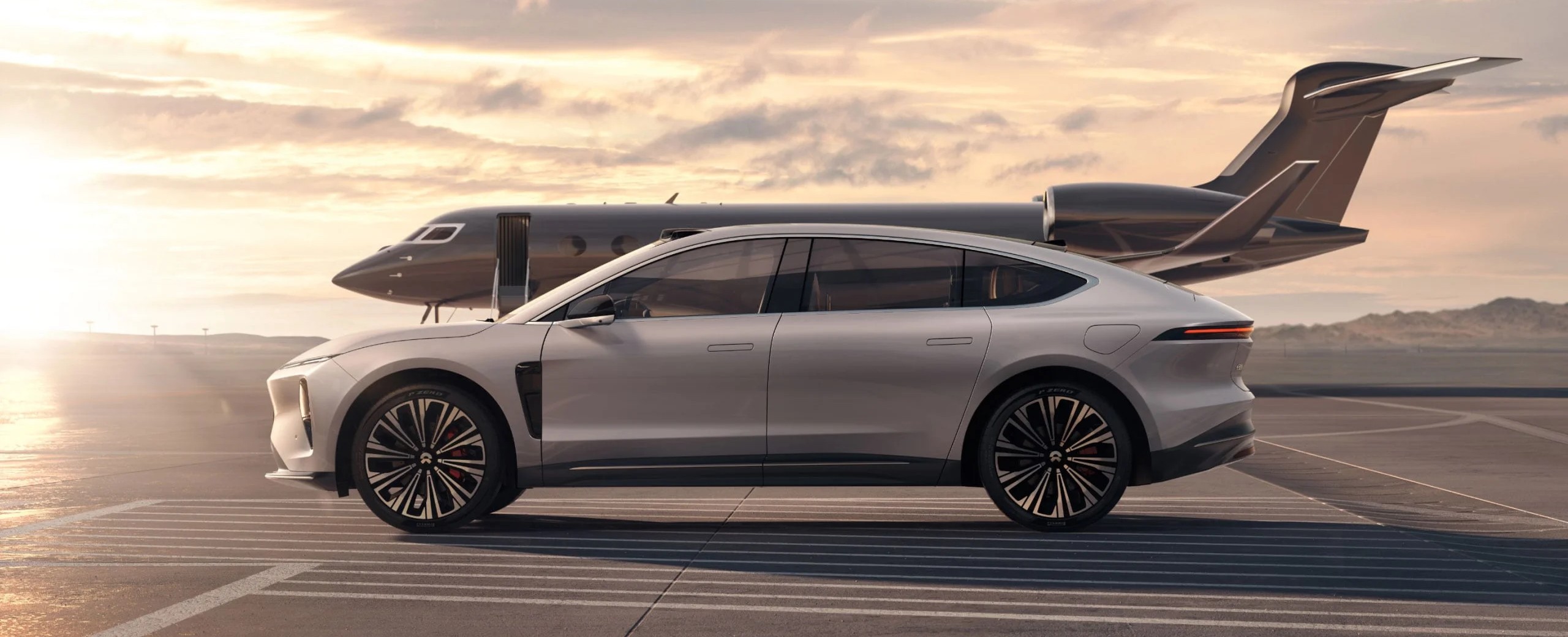
ET9
Design Challenge
How to define the digital cockpit of NIO’s flagship ET9 when the user is no longer required to focus solely on the road?
Impact
Established the HMI standard for all NT3-based models (ES8, ES6, EC6). The "Skyline Screen" architecture became a core brand asset for NIO.
02 The Strategic Insight: The "10% Gap"
Through workshops with AD scientists, I identified a critical technical bottleneck which I termed
"The Autonomy Paradox"
- Technical Reality: While the system handles 90% of driving, the human remains 10% responsible for safety.
- User Conflict: Users desire total immersion (movies, work), but the system demands "standby" alertness.
The Pivot: Design shouldn't blur the lines of autonomy. Instead, it must provide clear physical and psychological boundaries so users can switch between "Control" and "Immersion" without cognitive friction.
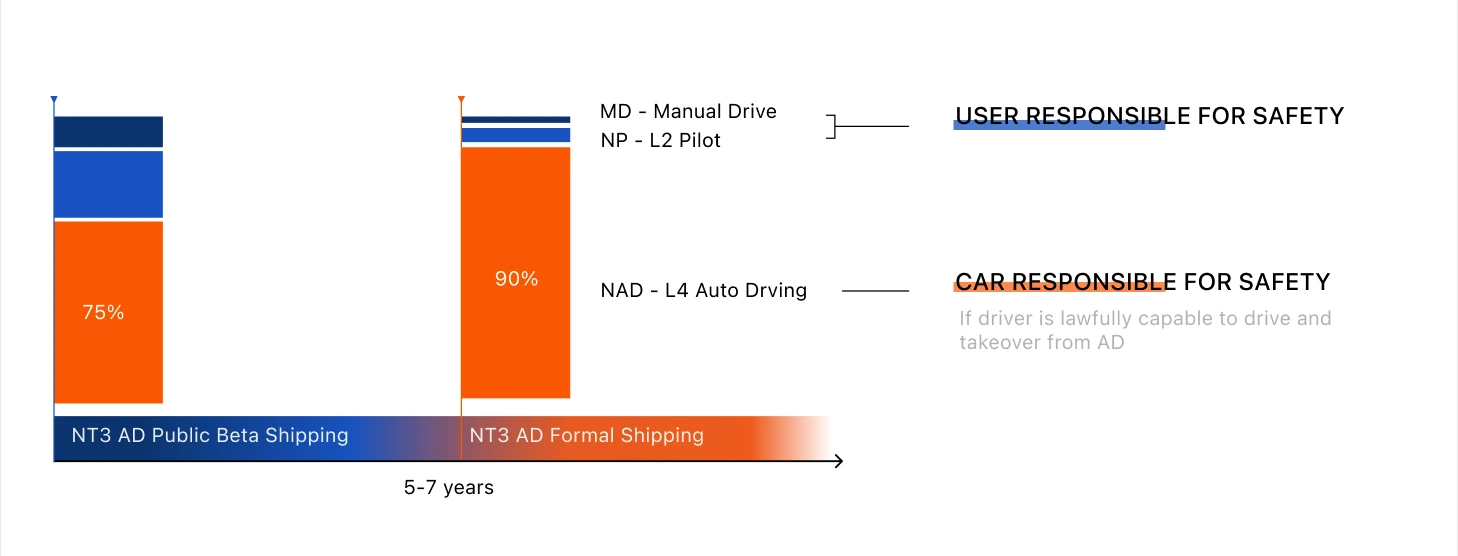
NT3: Next-gen Digital Platform
03 Design Framework: "Living vs. Driving"
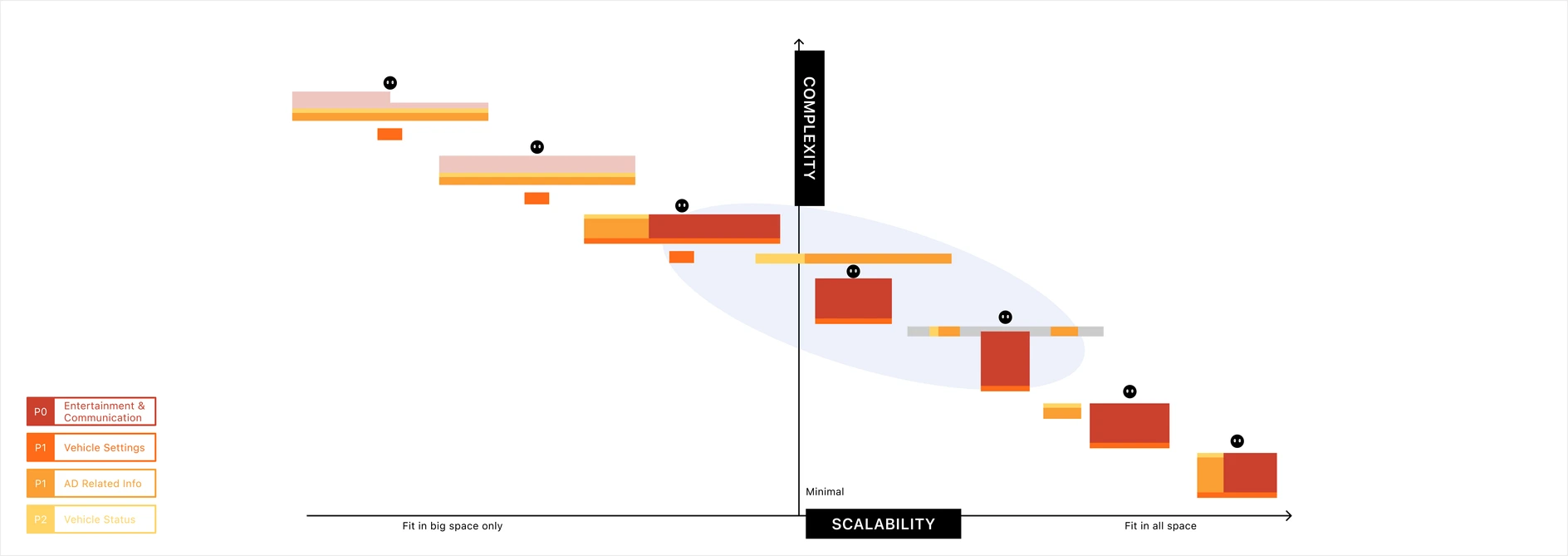
We deconstructed the cabin experience using an Attention Modeling framework:
1. Spatial Decoupling
- Driving Zone: Focus on "Confidence." Key driving data is placed at the far-end line of sight to minimize eye movement.
- Living Zone: Focus on "Immersion." The center and co-driver screens provide entertainment and productivity tools.
2. In-Cabin Equity
In the AD era, passengers also need to feel secure. We shifted information from a "Driver-Centric" model to a "Shared Awareness" model, making vehicle status visible to everyone in the cabin.
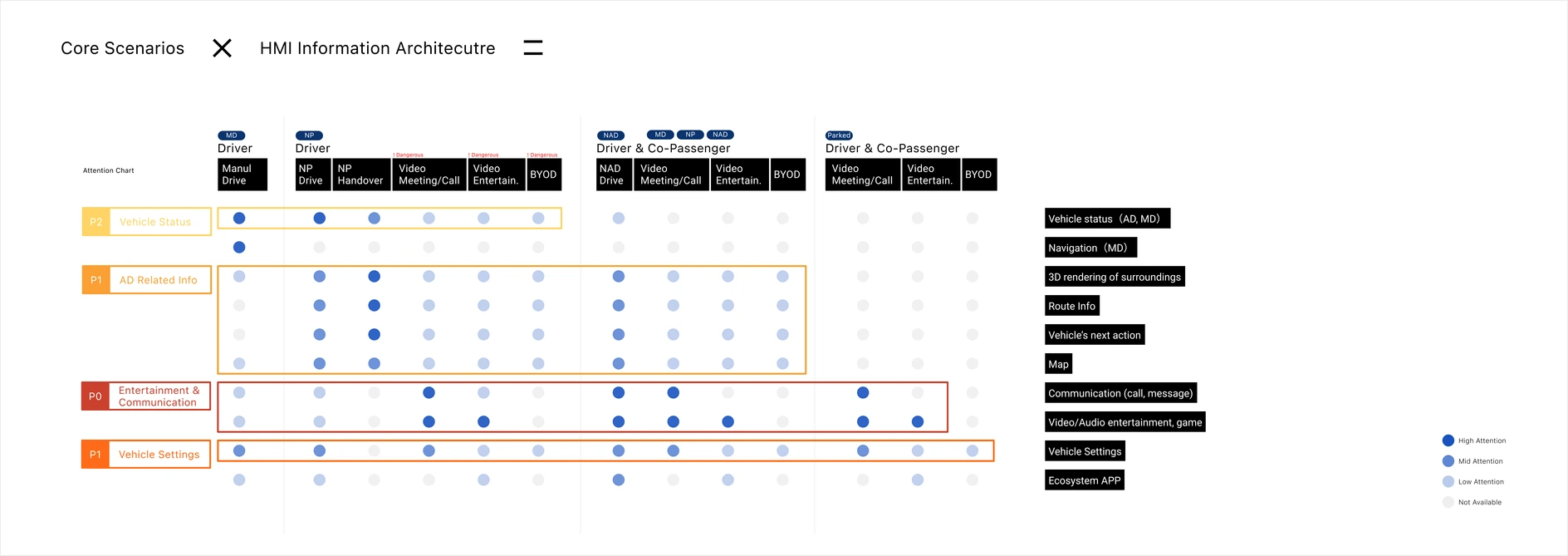
Attention Chart
04 The Solution: Skyline Screen
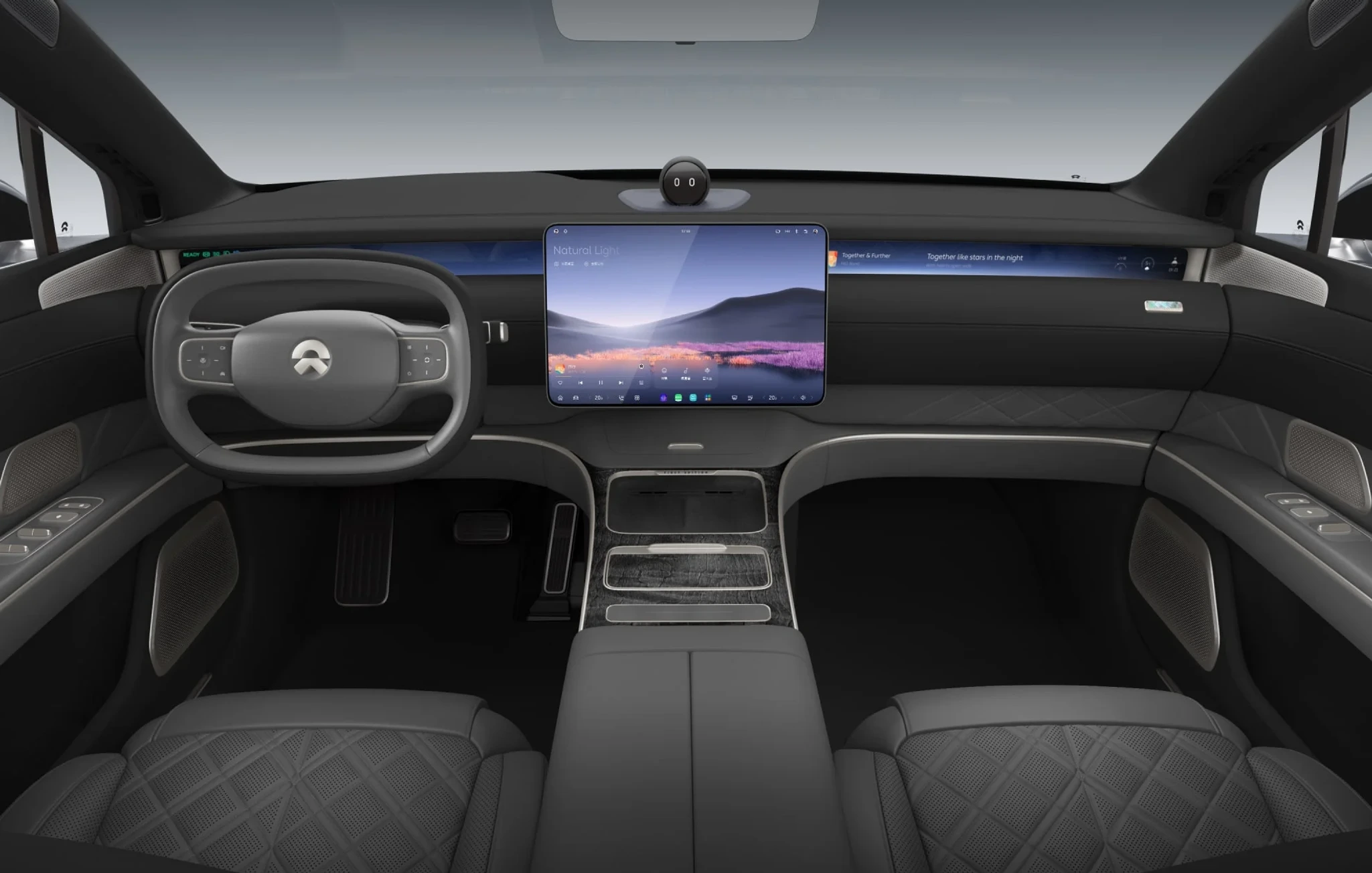
After prototyping seven layout concepts, we selected the Skyline Screen as the definitive architecture for the flagship.
Prototype Round 1
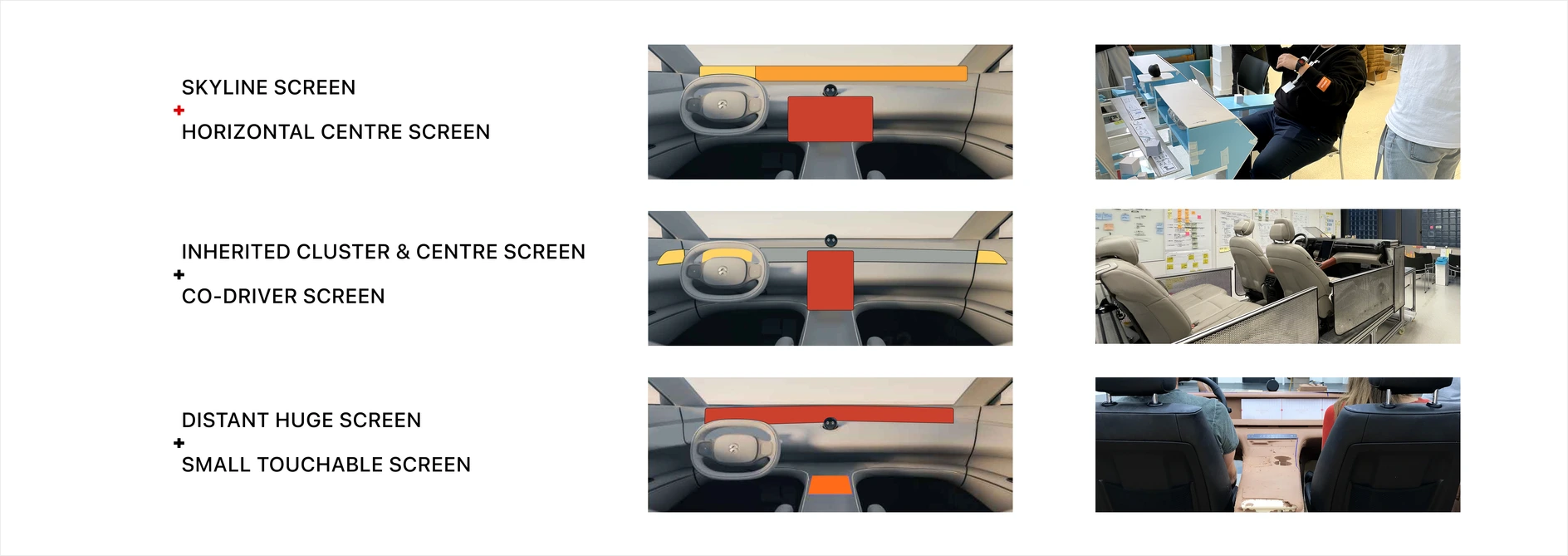
Prototype Round 2
Why the Skyline Screen?
- Ergonomic Precision: Positioned at the base of the windshield, it supports the "Zipping Moment"—the critical 2-second window when a user must regain situational awareness from AD mode.
- Cognitive Clarity: The horizontal span allows Spatial Reality (SR) data to breathe, preventing the visual clutter common in vertical or stacked clusters.
- Engineering Feasibility: Compared to ultra-wide curved displays, the Skyline setup offered a superior balance of immersive feel and cost-effective manufacturing.
05 UX Design: From Stress-Testing to Trust
Before finalizing the interface, we conducted a rigorous two-phase prototyping process to validate the radical change in screen architecture.
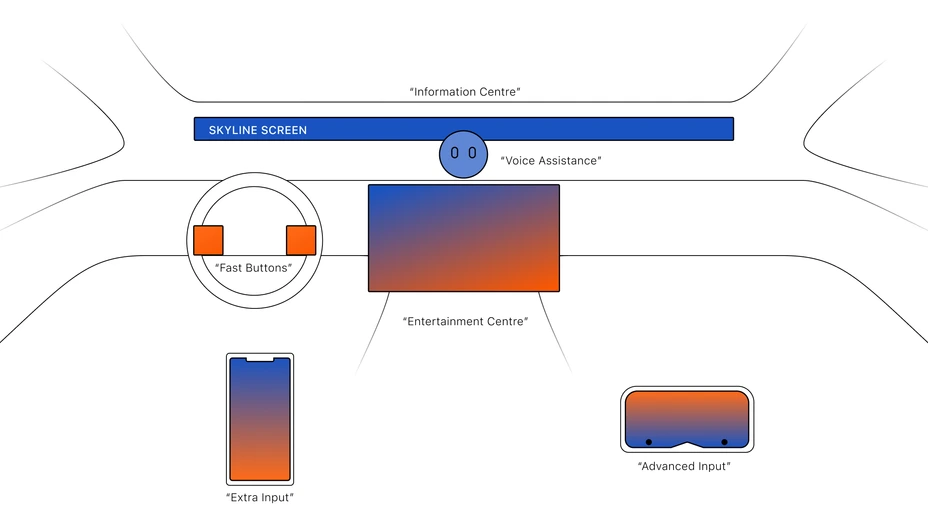
Mental Model
Phase 1: Testing the boundary
The initial software prototype was designed to "break" the system—pushing the visual and ergonomic limits of the Skyline Screen.
Testing Goals:
- Visual Density: Evaluating readability with maximum data
- Physical Ergonomics: Analyzing occlusion caused by the steering wheel, Nomi, and varying seat positions.
- Multi-Role Accessibility: Validating if the "Shared Awareness" info was truly readable from the co-driver and 2nd-row executive seats.
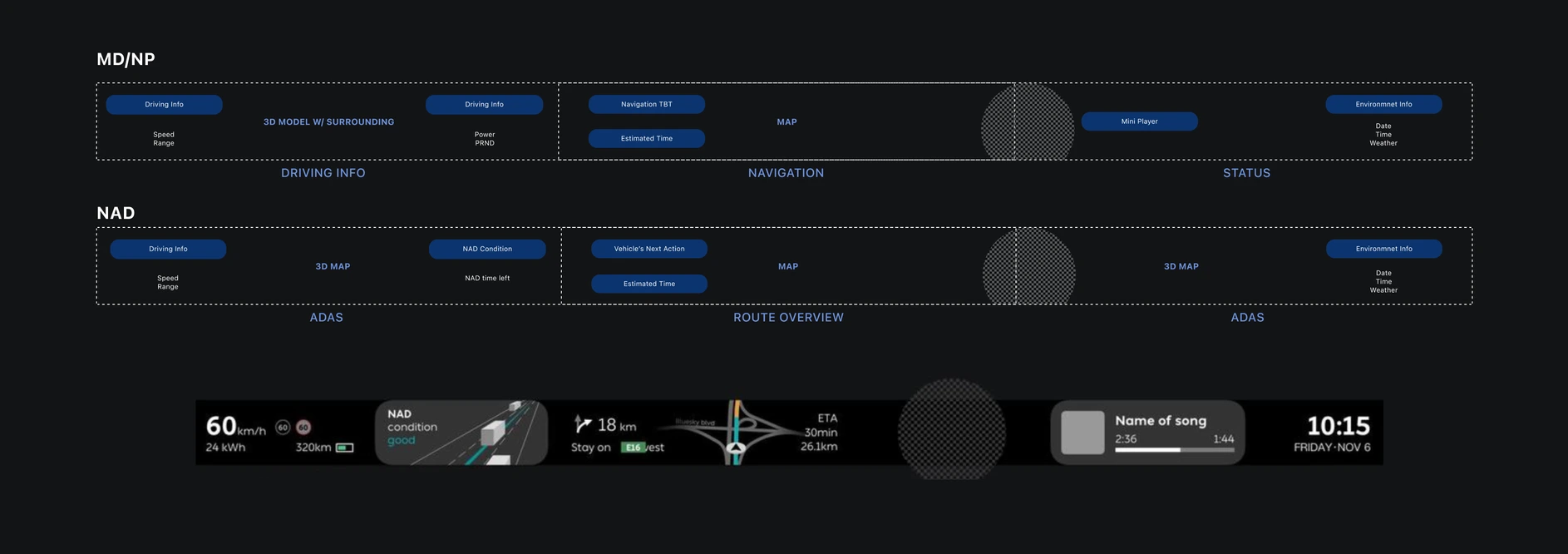
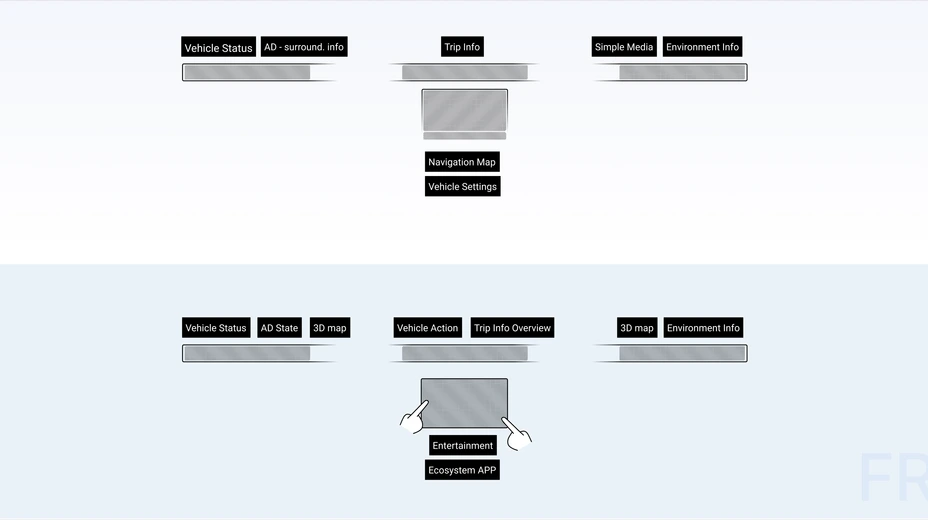
V1.0
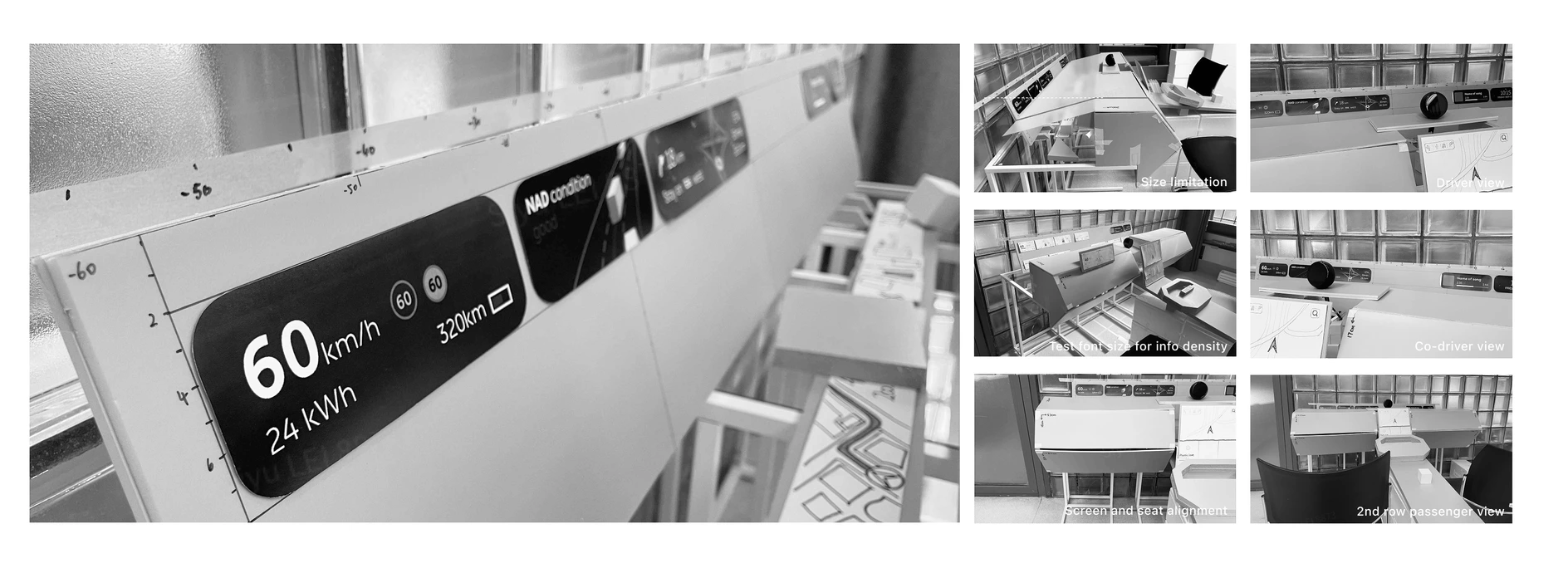
Handmade Rough Prototypes
Phase 2: Refinement — Designing for "Calm Confidence"
In V2, we streamlined the layout to support the "Zipping Moment" (the transition between manual and AD modes).
- Nomi’s Evolution: Moved Nomi behind the screen to prevent physical occlusion while maintaining its emotional presence.
- Streamlined Zoning: Reduced complexity from three zones to two—one for core driving/AD status and one modular zone for context.
The Result:
- 100% accuracy in interpreting AD system status within a 2-second glance.
- 85% of participants (n=12) found the layout more “calm and confident
- Visibility and comprehension improved significantly for co-driver and rear seats
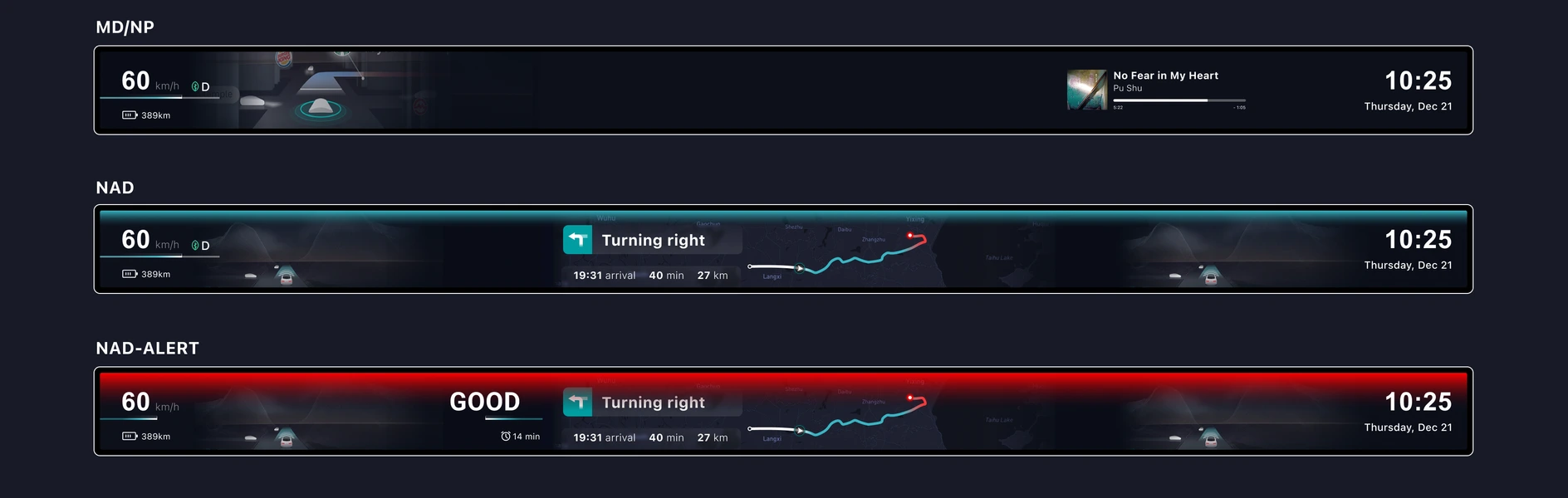
V2.0
06 Business Impact & Reflection
The launch of the ET9 was not just a product release; it was the birth of a new HMI paradigm.
- Market Success: The ET9 First Edition sold out within 12 hours. Media acclaimed the interior as a "First-Class Flight on the Ground."
- Scalable Legacy: This architecture is now the standard for NIO’s 3rd-generation vehicle platform, ensuring design consistency across the entire fleet.
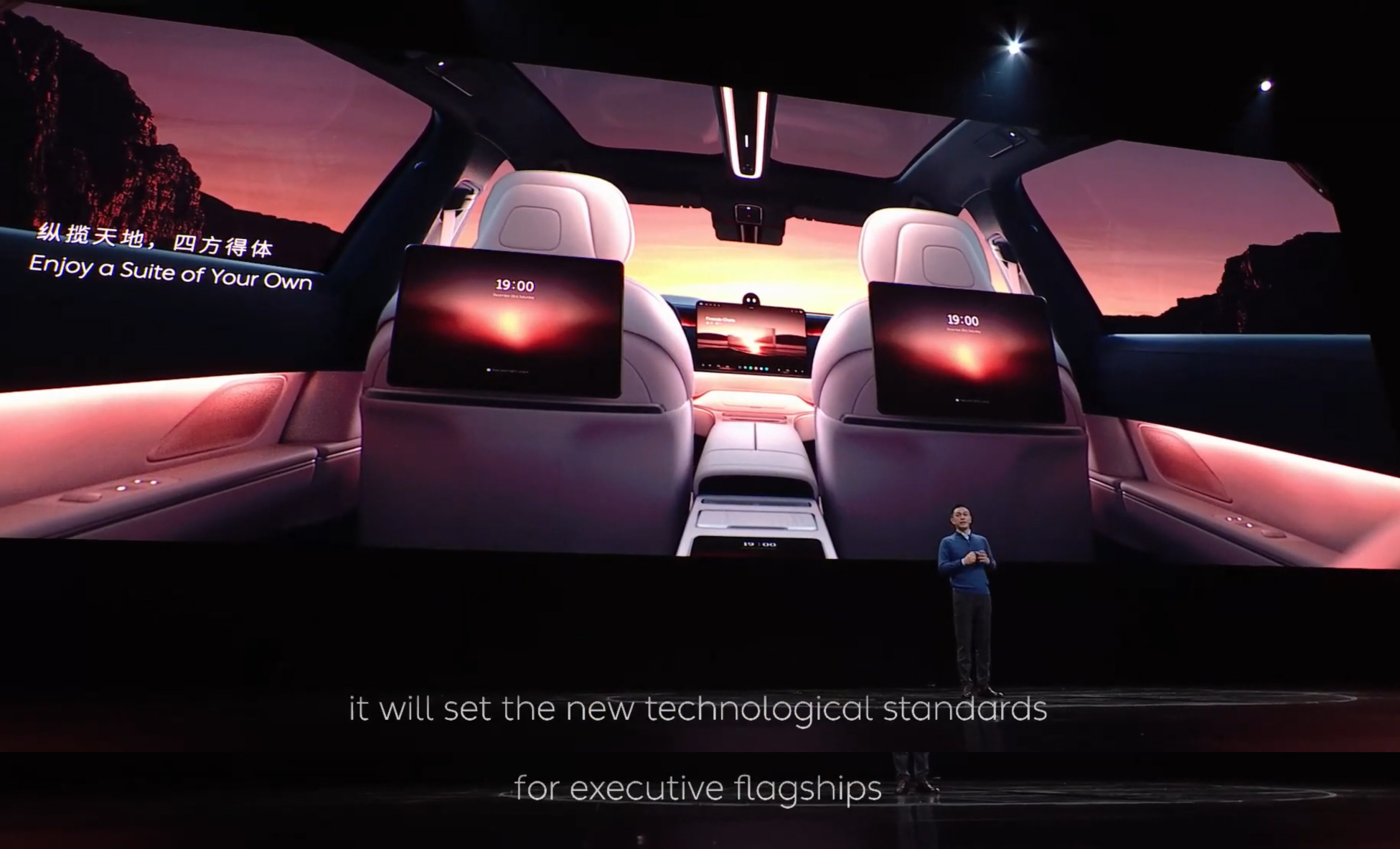
2025 NIO Day, founder&CEO William announced ET9
Reflection: Designing for "Imperfect" Tech
A designer’s value isn't just in envisioning a distant future, but in bridging the "grey zone" of current technology. By creating the Skyline Screen, we built a bridge of trust—allowing users to feel the freedom of the future, safely, today.
RAIN LEI
Back to Top
↑
ET9: Reimagining the In-Cabin Experience in the Autonomous Era
IMPACT
-56% glance time+37% user satisfaction+32% task completion8 models adopted500K+ units shipped
ROLE
Sole Product Manager: Strategy, Research & Prototyping
Led cross-functional alignment with research, vehicle design, engineering, and AD scientist teams
COMPANY
NIO
DURATION
3-month
01 Overview
During the early development of the NT3 platform, Autonomous Driving (AD) was in an "awkward" transition from assisted control to full autonomy.
ET9
Design Challenge
How to define the digital cockpit of NIO’s flagship ET9 when the user is no longer required to focus solely on the road?
Impact
Established the HMI standard for all NT3-based models (ES8, ES6, EC6). The "Skyline Screen" architecture became a core brand asset for NIO.
02 The Strategic Insight: The "10% Gap"
Through workshops with AD scientists, I identified a critical technical bottleneck which I termed
"The Autonomy Paradox"
- Technical Reality: While the system handles 90% of driving, the human remains 10% responsible for safety.
- User Conflict: Users desire total immersion (movies, work), but the system demands "standby" alertness.
The Pivot: Design shouldn't blur the lines of autonomy. Instead, it must provide clear physical and psychological boundaries so users can switch between "Control" and "Immersion" without cognitive friction.
NT3: Next-gen Digital Platform
03 Design Framework: "Living vs. Driving"
We deconstructed the cabin experience using an Attention Modeling framework:
1. Spatial Decoupling
- Driving Zone: Focus on "Confidence." Key driving data is placed at the far-end line of sight to minimize eye movement.
- Living Zone: Focus on "Immersion." The center and co-driver screens provide entertainment and productivity tools.
2. In-Cabin Equity
In the AD era, passengers also need to feel secure. We shifted information from a "Driver-Centric" model to a "Shared Awareness" model, making vehicle status visible to everyone in the cabin.
Attention Chart
04 The Solution: Skyline Screen
After prototyping seven layout concepts, we selected the Skyline Screen as the definitive architecture for the flagship.
Prototype Round 1
Prototype Round 2
Why the Skyline Screen?
- Ergonomic Precision: Positioned at the base of the windshield, it supports the "Zipping Moment"—the critical 2-second window when a user must regain situational awareness from AD mode.
- Cognitive Clarity: The horizontal span allows Spatial Reality (SR) data to breathe, preventing the visual clutter common in vertical or stacked clusters.
- Engineering Feasibility: Compared to ultra-wide curved displays, the Skyline setup offered a superior balance of immersive feel and cost-effective manufacturing.
05 UX Design: From Stress-Testing to Trust
Before finalizing the interface, we conducted a rigorous two-phase prototyping process to validate the radical change in screen architecture.
Mental Model
Phase 1: Testing the boundary
The initial software prototype was designed to "break" the system—pushing the visual and ergonomic limits of the Skyline Screen.
Testing Goals:
- Visual Density: Evaluating readability with maximum data
- Physical Ergonomics: Analyzing occlusion caused by the steering wheel, Nomi, and varying seat positions.
- Multi-Role Accessibility: Validating if the "Shared Awareness" info was truly readable from the co-driver and 2nd-row executive seats.
V1.0
Handmade Rough Prototypes
Phase 2: Refinement — Designing for "Calm Confidence"
In V2, we streamlined the layout to support the "Zipping Moment" (the transition between manual and AD modes).
- Nomi’s Evolution: Moved Nomi behind the screen to prevent physical occlusion while maintaining its emotional presence.
- Streamlined Zoning: Reduced complexity from three zones to two—one for core driving/AD status and one modular zone for context.
The Result:
- 100% accuracy in interpreting AD system status within a 2-second glance.
- 85% of participants (n=12) found the layout more “calm and confident
- Visibility and comprehension improved significantly for co-driver and rear seats
V2.0
06 Business Impact & Reflection
The launch of the ET9 was not just a product release; it was the birth of a new HMI paradigm.
- Market Success: The ET9 First Edition sold out within 12 hours. Media acclaimed the interior as a "First-Class Flight on the Ground."
- Scalable Legacy: This architecture is now the standard for NIO’s 3rd-generation vehicle platform, ensuring design consistency across the entire fleet.
2025 NIO Day, founder&CEO William announced ET9
Reflection: Designing for "Imperfect" Tech
A designer’s value isn't just in envisioning a distant future, but in bridging the "grey zone" of current technology. By creating the Skyline Screen, we built a bridge of trust—allowing users to feel the freedom of the future, safely, today.
ET9: Reimagining the In-Cabin Experience in the Autonomous Era
IMPACT
-56% glance time+37% user satisfaction+32% task completion8 models adopted500K+ units shipped
ROLE
Sole Product Manager: Strategy, Research & Prototyping
Led cross-functional alignment with research, vehicle design, engineering, and AD scientist teams
COMPANY
NIO
DURATION
3-month
01 Overview
During the early development of the NT3 platform, Autonomous Driving (AD) was in an "awkward" transition from assisted control to full autonomy.
ET9
Design Challenge
How to define the digital cockpit of NIO’s flagship ET9 when the user is no longer required to focus solely on the road?
Impact
Established the HMI standard for all NT3-based models (ES8, ES6, EC6). The "Skyline Screen" architecture became a core brand asset for NIO.
02 The Strategic Insight: The "10% Gap"
Through workshops with AD scientists, I identified a critical technical bottleneck which I termed
"The Autonomy Paradox"
- Technical Reality: While the system handles 90% of driving, the human remains 10% responsible for safety.
- User Conflict: Users desire total immersion (movies, work), but the system demands "standby" alertness.
The Pivot: Design shouldn't blur the lines of autonomy. Instead, it must provide clear physical and psychological boundaries so users can switch between "Control" and "Immersion" without cognitive friction.
NT3: Next-gen Digital Platform
03 Design Framework: "Living vs. Driving"
We deconstructed the cabin experience using an Attention Modeling framework:
1. Spatial Decoupling
- Driving Zone: Focus on "Confidence." Key driving data is placed at the far-end line of sight to minimize eye movement.
- Living Zone: Focus on "Immersion." The center and co-driver screens provide entertainment and productivity tools.
2. In-Cabin Equity
In the AD era, passengers also need to feel secure. We shifted information from a "Driver-Centric" model to a "Shared Awareness" model, making vehicle status visible to everyone in the cabin.
Attention Chart
04 The Solution: Skyline Screen
After prototyping seven layout concepts, we selected the Skyline Screen as the definitive architecture for the flagship.
Prototype Round 1
Prototype Round 2
Why the Skyline Screen?
- Ergonomic Precision: Positioned at the base of the windshield, it supports the "Zipping Moment"—the critical 2-second window when a user must regain situational awareness from AD mode.
- Cognitive Clarity: The horizontal span allows Spatial Reality (SR) data to breathe, preventing the visual clutter common in vertical or stacked clusters.
- Engineering Feasibility: Compared to ultra-wide curved displays, the Skyline setup offered a superior balance of immersive feel and cost-effective manufacturing.
05 UX Design: From Stress-Testing to Trust
Before finalizing the interface, we conducted a rigorous two-phase prototyping process to validate the radical change in screen architecture.
Mental Model
Phase 1: Testing the boundary
The initial software prototype was designed to "break" the system—pushing the visual and ergonomic limits of the Skyline Screen.
Testing Goals:
- Visual Density: Evaluating readability with maximum data
- Physical Ergonomics: Analyzing occlusion caused by the steering wheel, Nomi, and varying seat positions.
- Multi-Role Accessibility: Validating if the "Shared Awareness" info was truly readable from the co-driver and 2nd-row executive seats.
V1.0
Handmade Rough Prototypes
Phase 2: Refinement — Designing for "Calm Confidence"
In V2, we streamlined the layout to support the "Zipping Moment" (the transition between manual and AD modes).
- Nomi’s Evolution: Moved Nomi behind the screen to prevent physical occlusion while maintaining its emotional presence.
- Streamlined Zoning: Reduced complexity from three zones to two—one for core driving/AD status and one modular zone for context.
The Result:
- 100% accuracy in interpreting AD system status within a 2-second glance.
- 85% of participants (n=12) found the layout more “calm and confident
- Visibility and comprehension improved significantly for co-driver and rear seats
V2.0
06 Business Impact & Reflection
The launch of the ET9 was not just a product release; it was the birth of a new HMI paradigm.
- Market Success: The ET9 First Edition sold out within 12 hours. Media acclaimed the interior as a "First-Class Flight on the Ground."
- Scalable Legacy: This architecture is now the standard for NIO’s 3rd-generation vehicle platform, ensuring design consistency across the entire fleet.
2025 NIO Day, founder&CEO William announced ET9
Reflection: Designing for "Imperfect" Tech
A designer’s value isn't just in envisioning a distant future, but in bridging the "grey zone" of current technology. By creating the Skyline Screen, we built a bridge of trust—allowing users to feel the freedom of the future, safely, today.